 | submitted by VodkaWithSnowflakes to barista [link] [4 comments] |
Videos
Personal watchlist

In this new video, the Mango Street YouTube channel shares some quick tips and tricks for improving your photo compositions. Here are some other Mango Street tutorials for beginners:
https://www.youtube.com/watch?v=7cOb2qlXsDY https://www.youtube.com/watch?v=gajBIB8K2SY https://www.youtube.com/watch?v=0q_qfSrTcLI
The always soothing School Of Life YouTube channel offers advice on how to argue “fruitfully and well.”

My daughter likes to joke that, in our house, if the smoke alarm is going off mom (me) is trying to cook. Guilty as charged! I'm a great baker but a terrible cook.
So, when I saw the title of this Brothers Green Eats video, "15 Mistakes Most Beginner Cooks Make," I stopped in my tracks and watched it. It was all news to me, so I'm sharing in case these tips are helpful to you too.
One commenter listed all 15 cooking fixes:
1. Dry meat off before cooking
2. Make meat even thickness
3. Let seasoned meat sit for at least 10 minutes
4. Controlling heat of pan
5. Enough oil in the pan
6. Preheat pan before adding oil
7. Pull meat early
8. Let meat sit and don't waste juice
9. Prep your veggies and aromatics
10. Create a plan of attack
11. Don't overcook veggies
12. Let your food chill (don't over stir)
13. Season your food
14. Make that shit look nice
15. Practice and you will get better
There are other great tips, watch the entire video.
Stella McCartney profiles David Lynch in this moody piece on the joys of cinema and transcendental meditation.

Via Nowness:
Having both reflected and refracted the modern world—from the provincial eeriness of Blue Velvet to the urban grime of Mulholland Drive—Lynch's work has consistently probed the magical and often dreamlike qualities of film. The LA-based director puts it simply: "Cinema is its own language." For Lynch, watching film—waiting for the curtains to rise, before descending into another world—shares many qualities with the inward reflection of meditation. This is especially relevant at a time when the subject matter of many films dips anxiously into modern darkness. But, as Lynch points out, "the filmmaker doesn’t have to be suffering to show suffering."
Throughout the film, an eclectic cast of cameos and creative talents make appearances (including McCartney herself) in order to highlight the benefits of transcendental meditation in addressing trauma and the epidemic of toxic stress. The collaboration was created in support of the works of the David Lynch Foundation, whose aim is to prevent these issues from further spreading.
• David Lynch in "Curtain's Up", from Stella McCartney (YouTube / Nowness)
Martin Hayes is arguably one of the greatest fiddlers to come out of Ireland in the past 100 years. His soulful, moody interpretation of well-known Irish traditional music is unlike anything else out there. It's slow moving, slow to build, and beautiful in a way all its own.
I've mentioned his primary band, The Gloaming, here in the past. But he's also got another group going on the side: The Martin Hayes Quartet. At first listen, their music sounds like more of the same (which is a wonderful thing!). But take the time to plumb its depths and the personality of the musicians playing, the voice of the instruments, and the choice of tunes will make you understand that, while it may seem like you're trekking familiar country, the ground beneath your feet is a very different territory than where you've walked before.
This video of the making of the quartet's first album, The Blue Room, is as beautiful as the band's music is calming. I've watched and listened to it many times since I first found it.
I hope you dig it as much as I do.
In 1982, Japanese avant-garde filmmaker Toshio Matsumoto used video cut-up techniques to deconstruct a single residential building into a disorienting architectural puzzle. The short film is titled Shift (シフト 断層). Music by Yasuke Inagaki.
From a 1996 interview with Matsumoto:
We have to do more to irritate and disturb modes of perception, thinking, or feeling that have become automatized in this way. I did several kinds of experiments from the 1970s to the 1980s that de-automatized the visual field. But when image technology progresses such that you can make any kind of image, people become visually used to that. That's why there's not much left today with a fresh impact. In this way, the problem is that the interpretive structure of narrating, giving meaning to, or interpreting the world has become so thoroughly systematized that one cannot conceive of anything else that is largely untouched. We have to de-systematize that.
(via r/ObscureMedia)
SHARE / TWEET / 3 COMMENTS
architecture / art / avant garde / cut-ups / experimental / film
From Evan Puschak, this explanation of how art went from almost fully representational painting to abstract impressionism in about 100 years is a 6-minute whirlwind tour of modern art, from Édouard Manet to Jackson Pollock’s drip paintings. I always love when Puschak dips back into art…the first video of ever posted of his was about Jacques-Louis David’s The Death of Socrates.
Tags: art art history Evan Puschak Jackson Pollock videoFor the National Film Board of Canada, director Andrea Dorfman and poet Tanya Davis collaborated on this short film about how to stay connected with ourselves and feel a connection with others while spending time physically apart from other people. I liked this bit about hugging a tree:
Go outside if you’re able, breathe the air
there are trees for hugging
don’t be embarrassed
it’s your friend, it’s your mother, it’s your new crush
lay your cheek against the bark, it’s a living thing to touch
See also Davis and Dorfman’s previous collaboration: How to Be Alone. (thx, scotty)
Tags: Andrea Dorfman how to poetry Tanya Davis videoYou rarely see the words fun and classical music in the same sentence.
That must be intentional. Just take a look at those musicians squeezed into their uncomfortable formal attire, all with pinched, somber expressions on their faces. And then you look at the audience, and see the exact same thing.
I must have missed the memo. Aren’t we allowed to enjoy this stuff?
But it gets worse when an unfamiliar modern work is on the program.
The fear in the crowd is palpable. Those folks in the expensive seats look like soldiers in a fox hole, hoping to dodge bullets and praying for survival. They ought to give out medals for bravery to the hardy souls who return after the intermission.
I’ve been there—you’ve been there too. Fun is out of the question, and other F words rear up to take its place.
But I’ve had enough of this. I’m now refusing to play along with this game.
There are so many fun and exciting works in the modern classical repertoire that never get performed. I have lots of them to recommend. (In a future article I plan to share a list of 50 living classical composers whose work you will enjoy hearing.)
But today I’m focusing just on piano concertos composed during the last 100 years. Here are 10 seldom heard works that really deserve a chance to delight audiences at the philharmonic.
10 Underrated Modern Piano Concertos
Nikolai Kapustin: Piano Concerto No.2, Op.14
Nikolai Kapustin (1937-2020) should have been a hotshot jazz pianist in New York—but he had the bad luck to grow up in Horlivka, Ukraine under the domination of the Stalinist USSR. He developed into a fierce virtuoso and extravagant classical composer, but he also played jazzy music on the side in a restaurant. However Kapustin’s approach to jazz was quirky—probably because he learned in such an unlikely setting.
Yet this might have been a blessing, allowing him to create jazz-oriented classical works that sound unlike anything heard in the US. (Check out his etudes.) He deserves a prominent place in the classical repertoire, but instead gets treated as a peculiar footnote to 20th century music. If audiences were exposed to these flashy works, they would love them—but when will they get the chance?
Takashi Yoshimatsu: Piano Concerto ‘Memo Flora’, Op.67
This is the most serene piano concerto you will ever hear. Let other composers write epic works inspired by emperors and wars—Takashi Yoshimatsu looks instead to flowers for guidance. This is like a tranquil landscape transformed into soundscape.
Peggy Glanville-Hicks: Etruscan Concerto
There’s a lot of energy directed now towards celebrating women composers—so why don’t we hear more music by Peggy Glanville-Hicks (1912-1990)? This Australian composer wrote bright, exciting works that grab the audience at the very first hearing. Her music deserves a revival—it feels very contemporary. And you could make a movie from her life story. She was cross-dressing before it was fashionable, traveled the world and had love affairs and friendships with famous figures.
In her lifetime, she was known mostly as an opera composer, but nowadays even those works are rarely heard. Her piano music is bittersweet and heartfelt, but never shows up on the concert program. Keith Jarrett, who recorded Glanville-Hicks’ Etruscan Concerto, has championed her work, but not many others have joined him.
Stan Getz once told me that he listened to new music the way a Wall Street broker studies the stock market.
That puzzled me at first. But over time, I’ve come to understand what he meant. Trends come and go, and it’s often hard to separate music of real value from the merely fashionable. As a result, it can take some digging to find new musicians to dig.
But if you’re persistent, you will find the winners, even in a down market.
Below are ten recent albums that make it into my private winner’s circle. As is often the case here, they cover a lot of territory—seven countries on four continents, to be specific.
Most of these will show up on my ‘Best of Year’ list, coming in December.
Happy listening!
Choice Electronic Grooves from East Africa
Dance music is trance music—or it should be. The dancers deserve at least that much. But so many contemporary electronic dance tracks fall short. Their beats are as lively as Campbell’s Tomato Soup, and just as canned. But every once in a while I hear plugged-in grooves that still carry an electric charge. Synthesized Sudan does that on every track, thanks to Jantra, a mysterious musician hailing from Fashaga, a disputed triangle of land on the border of Sudan and Ethiopia. The subtitle of his album is (pause for breath): Astro-Nubian Electronic Jaglara Dance Sounds from the Fashaga Underground. Half those words don’t show up in my dictionary. So I won’t try to decipher or explain it—I’m just moving to the groove.
Below is a choice track, but also check out this behind-the-scenes video clip.
21st Century Juke Joint Blues
This is the best blues album I’ve heard so far this year. That’s especially surprising because it’s a compilation of new tracks by artists working for a small indie label, Dan Auerbach’s Nashville-based Easy Eye Sound. And most of them are playing music out of a Hill Country tradition that sometimes seems on the verge of extinction.
But this record makes clear that those old stylings can still keep juke joints jumping in the year 2023. I could pick and choose among the artists represented here, and many people will head straight to the hot and swampy track by the well-known Black Keys. But I’ll tell you that everybody who participated in Tell Everybody! delivered the goods.
Contemporary Music for the Bagpipe
Many people go running when they hear the bagpipe. But, of course, that was the original intention. They brought these cumbersome instruments into battle, and the goal was to frighten the enemy.
I tried learning how to play one of these bad boys during a trip to Scotland, and even enlisted the help of a skilled teacher. Halfway through the first lesson, I put a stop to the proceedings. “Let’s forget about teaching me to play,” I suggested, “and instead let’s use the rest of our time talking about the best bagpipe albums.”
That turned out to be a useful move. I returned to the United States with cool piping records in my suitcase.
Nowadays, I’d put Brìghde Chaimbeul (pronounced Bree-chu CHaym-bul) at the top of my list of contemporary bagpipers. And this ought to be the perfect moment for a bagpipe revival, given the rising popularity of drone music in a range of genres. She can certainly drone with the best, but her tone also possesses a plaintive quality that you probably don’t associate with drone music. Part of that derives from her instrument. Chaimbeul plays the Scottish smallpipes, less overpowering than the more familiar great Highland bagpipes. If the latter are ready for war, the former are suitable for love.
An extra plus is the presence of Canadian saxophonist Colin Stetson, who has featured Chaimbeul on his own projects. I’ve praised Stetson frequently in the past, so you can imagine how excited I am about this collaboration. Their duo encounters are like Simon & Garfunkel or Sonny & Cher for circular breathing fans.
Even today, jazz pianists rely heavily on the innovations of the 1940s. That includes young keyboardists who haven’t actually listened to these old recordings—but still rely heavily on the musical vocabulary presented in the tracks below. They can’t avoid it because those licks and chords and rhythms are everywhere now.
Below is my quick guide to the changes that took place during that tumultuous decade—ten tracks you can hear in one sitting. I start with the roots of the new sound as played by the Kansas City pioneers, but before we reach the end of the list we will already have one foot in the avant-garde.
If you haven’t heard this music before, be prepared for surprises. At the start of the decade, jazz piano still betrayed its origins in ragtime and parlor piano theatrics. But under the onslaught of these intrepid improvisers, a completely different approach to the keyboard came to the forefront of American music.
Happy listening!
Count Basie, “One O’Clock Jump” (Live at Carnegie Hall, 1941)
Count Basie didn’t participate in the bebop movement that defined modern jazz in the 1940s, but he played a key role in making it possible. Starting back in his Kansas City days, he discarded the orchestral two-handed approach of his predecessors in favor of a more streamlined sound—with the right hand floating over the beat, mostly spinning out monophonic melodic lines, while the left hand provided occasional comping chords, more as rhythmic accents than actual timekeeping. The next generation of pianists built on this foundation, taking Basie’s looser and more flexible approach in new directions—but only after the Count had cleared the way with his radical re-conceptualization of the jazz pulse.
Nat King Cole, “Let’s Try Again” (1941)
Older music fans may remember Nat King Cole as one of the most popular singers of his generation, but jazz musicians know how wickedly good he was as a pianist. Oscar Peterson drew heavily on Cole’s example—in fact, if you double up the speed of some of Nat’s solos they sound almost exactly like Oscar. Cole’s approach to the keyboard lingered halfway between swing and bop. He never embraced the pedal-to-the-metal intensity of Bud Powell or Lennie Tristano, but his rhythmic phrasing is supple and forward-looking. I have no doubt that if he had walked away from all those high-paid singing gigs, instead going on the road with bop legends, he could have matched them solo for solo.
Thelonious Monk, “I Got Rhythm” (Live at Minton’s Playhouse, 1941)
In some ways, this performance is more old-fashioned than the Basie and Cole tracks from the same year. At first hearing, you notice how closely Thelonious Monk sticks to the full-bodied stride piano tradition, which was so popular in New York during his youth. But the more you listen, the more off-kilter it sounds. His all-too-brief solo (at 6:10) is filled with phrases that start when you think they should stop, and stop when you think they should start—with occasional notes accented with the subtlety of a Joe Louis right hook. You listen to this nowadays and call it the birth of bebop, but back in 1941 it didn’t even have a name, and only one person in the world played the piano like this.
Dodo Marmarosa, “The Moose” (1943)
This is a full-fledged bebop piano solo in a commercial record from 1943, when few people who hadn’t been to a Harlem jam session had any notion this kind of music existed. You need to realize that Charlie Parker hadn’t made his Savoy or Dial recordings back then, and Dizzy Gillespie wouldn’t undertake his first studio recording with Bird until 1945. Yet Maramosa is playing this music before D-Day as if he knew bop in his cradle. This tragically under-reorded musician would soon fall from view, and when I tracked him down toward the end of his life, many simply assumed he was dead. But the sad truth was that Dodo had been forgotten by a music business that should have celebrated him as one of the most visionary pianists of his generation.
I stray off the beaten path in search of righteous music you won’t hear about elsewhere.
I’m not deliberately trying to be obscure. But it works out that way. The best music nowadays comes mostly from tiny indie labels and self-produced albums. It flourishes in unexpected places—and often gets distributed without a marketing campaign, or even a press release.
That’s certainly the case with most of the albums I’m recommending below. Many of these tracks were made at home or school or an abandoned water tank in rural northwest Colorado. But we won’t hold that against them.
As always, I’m covering a range of genres, styles, and countries.
Happy listening!
Timo Lassy & Jukka Eskola: Nordic Stew
Brave Helsinki Horn Players Hire New Orleans Rhythm Section
What happens when Finnish horn players Timo and Jukka get bored one day and decide to fly to Louisiana to hire a real New Orleans rhythm section? Our fearless Finns feel they are funky, but are they funky enough to groove on this deep, deep parade beat?
There’s no need to wonder what it sounds like, because here it is. Timo Lassy and Jukka Eskola put it all down on record in the Tremé neighborhood, and brought the tracks back to Helsinki to mix.
If this band ever marches down my street, I’m rushing out to join the second line. (Hat tip to Evan Goldfine for alerting me to this album.)
Oscilan: Madre Tierra
Acapella Mantras from Chile (with Occasional Raps)
Amazing things can happen in your bedroom—and I’m just talking music. One person created this album at home in Chillán, Chile. I can’t tell you much about Oscilan, who operates as singer, composer, and producer here—channeling it all into a microphone. Madre Tierra blends chants, melodies, grunts, breaths, and raps in unconventional ways. But it sounds confessional, not gimmicky. Maybe you need to do this kind of sonic birthing in your most intimate space.
Fabiano do Nascimento & Sam Gendel: The Room
Duets for 7-String Guitar and Soprano Saxophone
I’m an extreme fan of both these fringe musicians—almost at the we’re-not-worthy level of cringe fandom. But I never ever expected these two opposites to join forces.
I started telling people about Rio de Janeiro-born guitarist Fabiano do Nascimento when he first hit the scene in Airto’s band. Even back then he made the top 10 of my best-of-year list and later showed up on my list of all-time favorite Brazilian albums—although I admitted he was the “least well-known musician” in that survey. I keep waiting for Nascimento to achieve some dose of stardom, but he somehow still hasn’t found a mainstream audience.
I admire Gendel, but for totally different reasons. That desperado does crazy things, and somehow pulls them off (not always, but most of the time) through sheer audacity and sure musical instincts. He is much farther out there than Nascimento, and with an entirely different musical lineage.
Somehow these two opposed forces came together in the studio. I’m gobsmacked. I had no idea that Gendel could play with such restraint and poise. This album is worth hearing if only for his soprano sax tone—does he use some studio trickery for that? That’s a very full-bodied sound for such a tiny instrument.
But don’t ignore Nacimento on guitar. He’s at the top of his game and it’s only a matter of time before the world takes notice.
Frances Chang: Psychedelic Anxiety
Quirky Maximalist Folk Pop Recorded at Home
Here’s another homemade winner. But don’t let the bosses hear this album. It violates all four taboos of pop radio. Frances Chang openly declares allegiance to (1) unexpected chord changes, (2) cushy vocal harmonies, (3) radical tempo shifts, and (4) acoustic real world sounds.
OMG, I love YouTube! I stumbled upo this video by Michael Wyetzner, breaking down five of the most common apartment types found in New York City. So interesting!
I LOVE Jefferson Fisher’s content on Instagram. I have taken so many of his communication tips into my life. Incredibly helpful. He just recently launched podcast where he dives in a bit deeper.

As of this writing, the Beatles’ “Revolution 9″ has more than 13,800,000 plays on Spotify. This has no doubt generated decent revenue, even given the platform’s oft-lamented payout rates. But compare that number to the more than half-a-billion streams of “Blackbird,” also on the Beatles’ self-titled 1968 “white album,” and you get an idea of “Revolution 9”’s place in the band’s oeuvre. Simply put, even ultra-hard-core Fab Four fans tend to skip it. Regardless, as Ian MacDonald writes in Revolution in the Head: The Beatles’ Records and the Sixties, “this eight-minute exercise in aural free association is the world’s most widely distributed avant-garde artifact.”
Masterminded by John Lennon, “Revolution 9” is not exactly a song, but rather an elaborate “sound collage,” assembled in broad adherence to an aesthetic developed by such avant-garde creators as William S. Burroughs, The Beatles’ graphic designer Richard Hamilton, John Cage, and Karlheinz Stockhausen. “While the cut-up texts of Burroughs, the collages of Hamilton, and the musique concrète experiments of Cage and Stockhausen have remained the preserve of the modernist intelligentsia,” writes MacDonald, “Lennon’s sortie into sonic chance was packaged for a mainstream audience which had never heard of its progenitors, let alone been confronted by their work.”
In the new Polyphonic video above, Noah Lefevre takes a dive into those progenitors and their work, providing the context to understand how “the Beatles’ weirdest song” came together. Points of interest on this cultural-historical journey include composer Pierre Schaeffer’s resistance-headquarters-turned-experimental-music-lab Studio d’Essai; Nazi Germany, where the early Magnetophon tape recorder was developed; the BBC Radiophonic Workshop; avant-garde rocker Frank Zappa’s Studio Z; and the Million Volt Light and Sound Rave, a 1967 happening that hosted “Carnival of Light,” a Beatles composition never heard again since.
What did Lennon, in collaboration with George Harrison and Yoko Ono (with whom he’d only just got together), think he was doing with “Revolution 9”? “To the extent that Lennon conceptualized the piece at all, it is likely to have been as a sensory attack on the citadel of the intellect,” writes MacDonald, “a revolution in the head aimed, as he stressed at the time, at each individual listener — and not a Maoist incitement to social confrontation, still less a call for general anarchy.” Indeed, as Lefevre points out, it expressed his ambivalence about the very concept of 1968-style revolt as much as the comparatively conventional “Revolution 1,” which comes earlier on the album. The sixties may be long over, but Lennon’s attitude hasn’t lost its relevance: we still hear an endless stream of promised solutions to society’s problems, and we’d still all love to see the plan.
Related content:
How the Beatles Experimented with Indian Music & Pioneered a New Rock and Roll Sound
The Beatles’ 8 Pioneering Innovations: A Video Essay Exploring How the Fab Four Changed Pop Music
Hear Paul McCartney’s Experimental Christmas Mixtape: A Rare & Forgotten Recording from 1965
The 10-Minute, Never-Released, Experimental Demo of The Beatles’ “Revolution” (1968)
How George Martin Defined the Sound of the Beatles: From String Quartets to Backwards Guitar Solos
Based in Seoul, Colin Marshall writes and broadcasts on cities, language, and culture. His projects include the Substack newsletter Books on Cities and the book The Stateless City: a Walk through 21st-Century Los Angeles. Follow him on the social network formerly known as Twitter at @colinmarshall.

Music video essay maestro Polyphonic is back. What I dig about his videos is that he takes on some of the true warhorses of modern popular music and manages to find something new to say. Or at least he presents familiar stories in a new and modern way to an audience who may be hearing ELO, Queen, or Neil Young for the first time.
His upload explores Dave Brubeck’s groundbreaking jazz album Time Out. This is an album that regularly tops best-of lists, gets reissued constantly, and is so ubiquitous in some circles that it’s hard, like Led Zeppelin’s fourth album, to hear the album with fresh ears.
Polyphonic touches on something right at the beginning of the video that deserves a full video essay of its own–the State Department’s mission to send American jazz musicians around the world as cultural ambassadors. This is a part of history that has receded from memory, but had a major influence not just on Brubeck, but so many records at that time. Brubeck joined Benny Goodman, Louis Armstrong, and Dizzy Gillespie on a musical tour that reached many countries behind the Iron Curtain, and were able to critique America’s racist history while also promoting its musical culture. (PBS made a fine documentary on the mission in 2018.) But for the purposes of this video essay, and regarding Brubeck’s career, it was the polyrhythms and folk music that he heard while traveling through countries like Turkey (from which he developed “Blue Rondo a la Turk”) that remained with him on his return.

Time Out was Brubeck’s fourteenth album for Columbia Records, but his breakthrough. Up to that point he and his quartet had released a number of live albums recorded at colleges (which promoted a safe but hip studious kind of jazz) and several albums of jazz covers, such as Dave Digs Disney. But Time Out was a fully formed concept album of sorts: an exploration into time signatures that jazz hadn’t really touched yet.
As Polyphonic points out, Joe Morello, Brubeck’s drummer, was indeed well versed in complicated time signatures from his classical background as a violinist. It was Morello who experimented with a groove in 5/4 time that became the backbone of “Take Five.” Brubeck knew a good thing when he heard it and gives Morello one of the best solos of the entire LP.

Best of all, Time Out is one those classic albums because of how it mixes the experimental with the commercial, a hard feat in any era, but even more impressive in that best of all jazz years, 1959. Brubeck continued to explore time signatures on this album’s sequel Time Further Out, which is also recommended.
Note: An earlier version of this post appeared on our site in 2019.
Related Content:
Pakistani Musicians Play an Enchanting Version of Dave Brubeck’s Jazz Classic, “Take Five”
Louis Armstrong Plays Historic Cold War Concerts in East Berlin & Budapest (1965)
Dave Brubeck’s Surprise Duet: A Magical Moment at the Moscow Conservatory (1997)
Watch an Incredible Performance of “Take Five” by the Dave Brubeck Quartet (1964)
Ted Mills is a freelance writer on the arts.
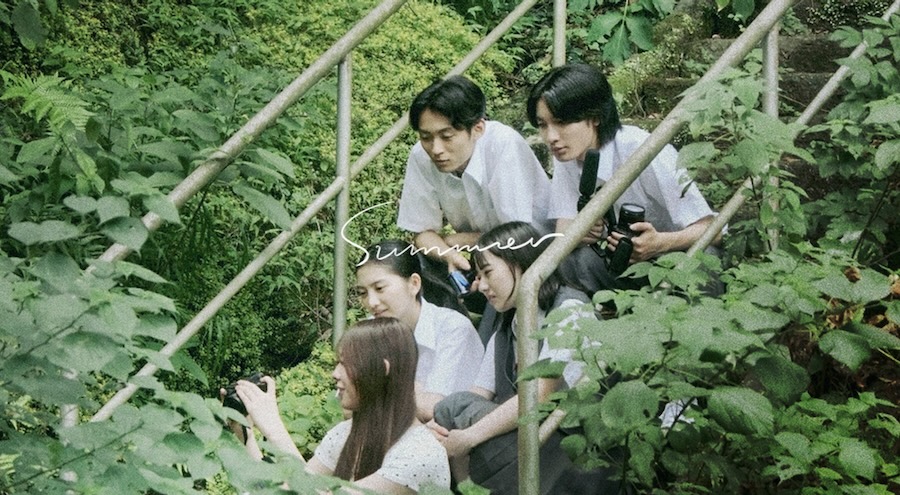
Originally composed as the main theme for Takeshi Kitano’s 1999 film Kikujiro, Joe Hisaishi’s timeless piece “Summer” has long been cherished in Japan as the soundtrack of nostalgic summer memories. Now, this beloved masterpiece is reimagined as a short film.
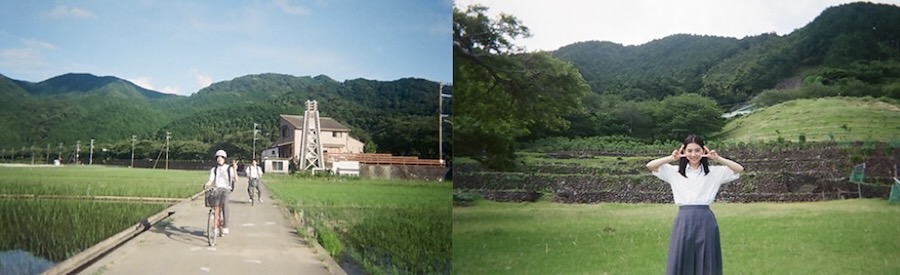
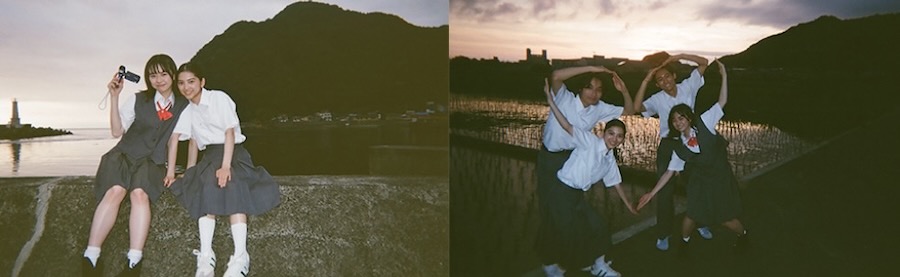
Set in a high school in the Japanese countryside that’s slated to close next spring, the story follows members of the school’s broadcasting club as they face their “final summer.” It quietly captures their everyday moments as they try to leave something behind—an imprint of youth, memory, and time.
With no spoken dialogue, the 7-min short film relies solely on music, visuals, and the nuanced expressions of the cast to evoke an emotional coming-of-age narrative. There’s more information about the cast and production on the main site.

If you, like us, are in desperate need of some outdoor time but are instead caught up in emails, meetings, and distressing news alerts, we have a salve to hold you over for at least an hour or two.
New York-based photographer Noah Kalina is known for expansive projects that test commitment and attention. His Everyday series, for example, involves Kalina capturing a daily self-portrait. While the concept of recurring projects like this isn’t novel, Everyday stands out for its longevity: the series recently passed 25 years, meaning it’s amassed a visual record nearing 10,000 images.
Kalina’s new project is similarly contemplative and durational, although it widens its lens. On the new KALINA YouTube channel, he’s shared a collection of ambient videos documenting landscapes as they are. You can watch the clouds hover above Andes, New York, spend two hours observing a black walnut tree, or head down by the river, where, as he says, “nothing happens.”
Referring to the videos as “moving wallpaper,” Kalina transports us to lush upstate New York and gives us permission to “press play and walk away.”
For more escapes into nature, listen to tree.fm. (via Kottke)
Do stories and artists like this matter to you? Become a Colossal Member today and support independent arts publishing for as little as $7 per month. The article Need an Escape? Tune Into Noah Kalina’s Ambient Landscapes Where Almost Nothing Happens appeared first on Colossal.